Blog
From Clay Pit to Historic Landmarks: Our Apprentice Challenge at Bulmer Brick & Tile Company
19th Oct, 2026

There are few better ways to learn about a business than to get your welly boots on the ground, meet the people behind it and see the skill that goes into their work. Last week, the Footprint Digital team did exactly that, swapping our usual desks for a day at The Bulmer Brick & Tile Company, discovering the fascinating world of traditional brickmaking and putting our marketing brains to the test.
Tucked away on the Essex and Suffolk border, Bulmer is a small, family-run brickworks with a history stretching back hundreds of years. Its handmade bricks have helped build and restore some of England’s most recognisable landmarks, from Hampton Court Palace (where they’ve been working since 1974) and Windsor Castle to St James’s Palace, Blickling Hall and Melford Hall.
We arrived curious, left thoroughly impressed, and came away with an even greater appreciation for the craftsmanship, heritage and sheer amount of knowledge that goes into making a brick.
A proper look behind the scenes
Our Friday morning began with a warm welcome from Tonia, a safety briefing and the obligatory blue high-visibility vests. These were partly to make sure we could be seen around the site and partly to distinguish us from any unsuspecting rambler who might have wandered off the path!
First stop was the clay pit, where we learnt about the minerals in the clay, the different layers beneath our feet and how the team selects the right materials for different types of brick and building projects. We even discovered that shark’s teeth are occasionally found in the clay, a reminder of just how much history lies beneath the surface.
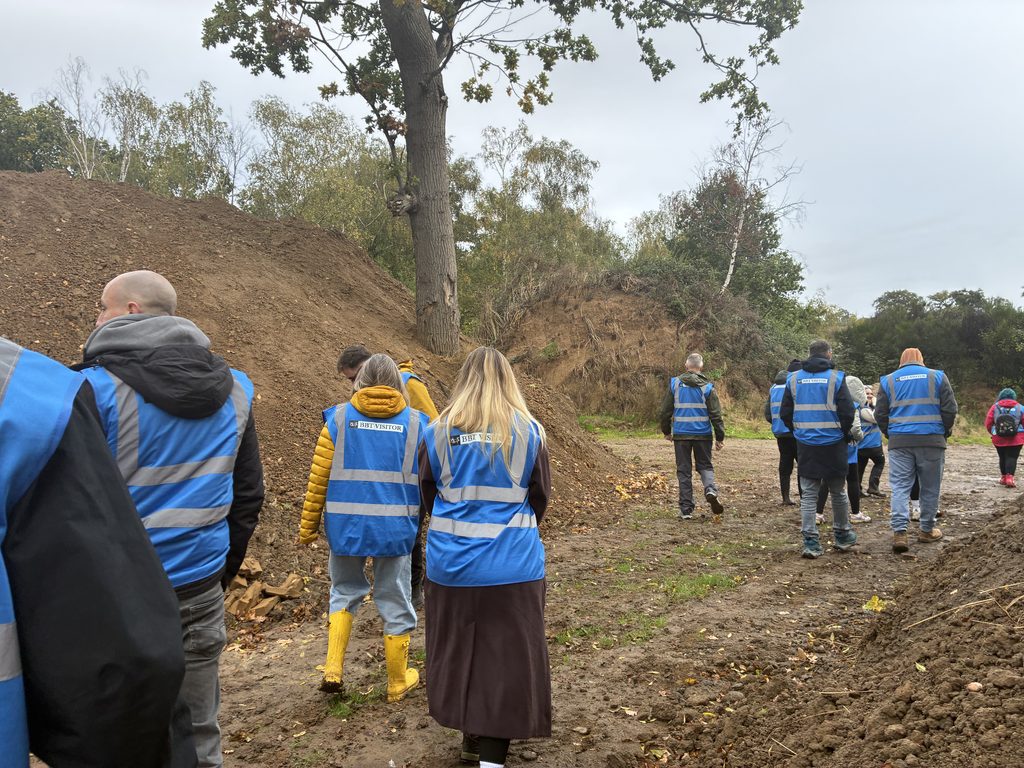
From there, we followed the process through the yard, seeing where the clay is stored and mixed before being turned into bricks. We were lucky enough to watch two highly skilled brickmakers at work, shaping bricks by hand with a speed and confidence that made the whole thing look deceptively easy. It quickly became clear that this is a craft that takes years of experience to master.
Next came the drying grounds, where rows of bricks are left outside before firing. And this is where the wildlife occasionally leaves its own mark on the finished product. Squirrels have been known to investigate the bricks in search of a rogue acorn, while weasels leave tiny pawprints as they perch on the bricks, watching out for mice. The yard’s resident dogs and cats also sometimes make their presence known.
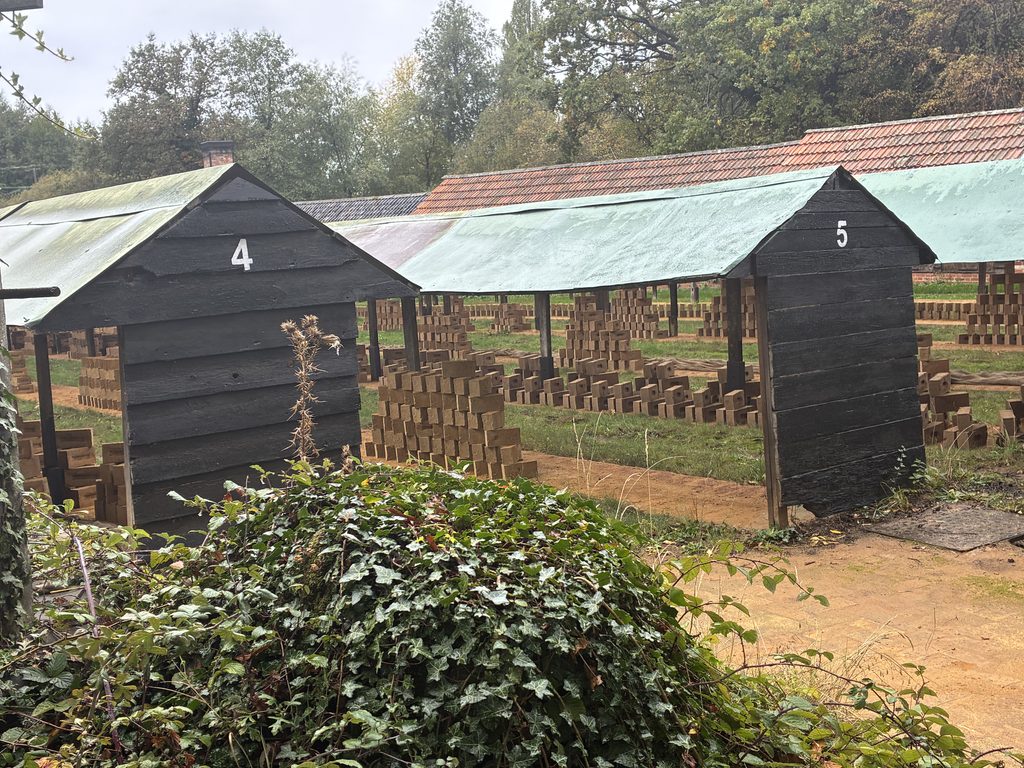
It was a lovely reminder that this is a working brickyard, not a factory where every stage is hidden away behind machinery. The process is tangible, the environment is full of character, and nature occasionally gets involved.
Meet Frank and Tom, the coal-fired kilns
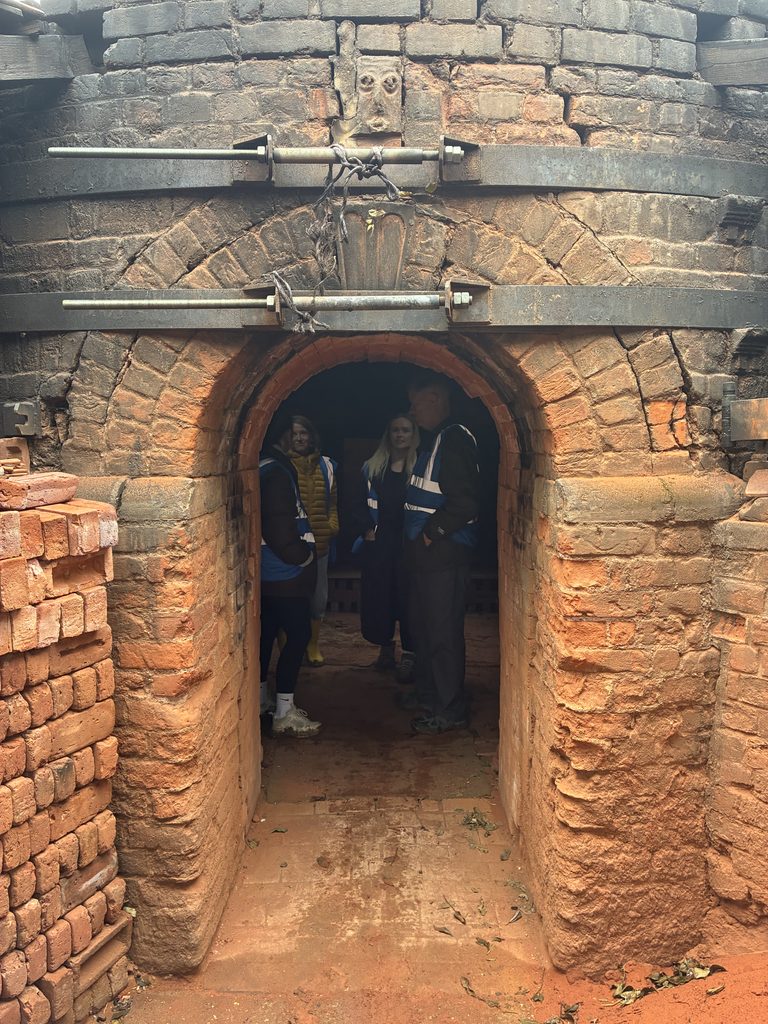
No visit to Bulmer would be complete without meeting Frank and Tom.
The brickyard’s two coal-fired, down-draught kilns are central to the process, using traditional firing methods to produce the bricks’ distinctive colours and finishes. We learnt that the team doesn’t rely on dyes or additives to achieve these variations. Instead, generations of experience inform how the bricks are positioned in the kiln and how the firing process is managed.
Originally, Frank was the only kiln on site. Tom was built when the business won work on St Pancras, requiring a much greater production capacity to deliver the bricks on time while continuing to fulfil other projects.
One of the highlights of the day was getting to stand inside Frank himself. He was still warm from the previous week’s firing, which made for a memorable hands-on moment and brought home just how much heat and expertise are involved in the process.
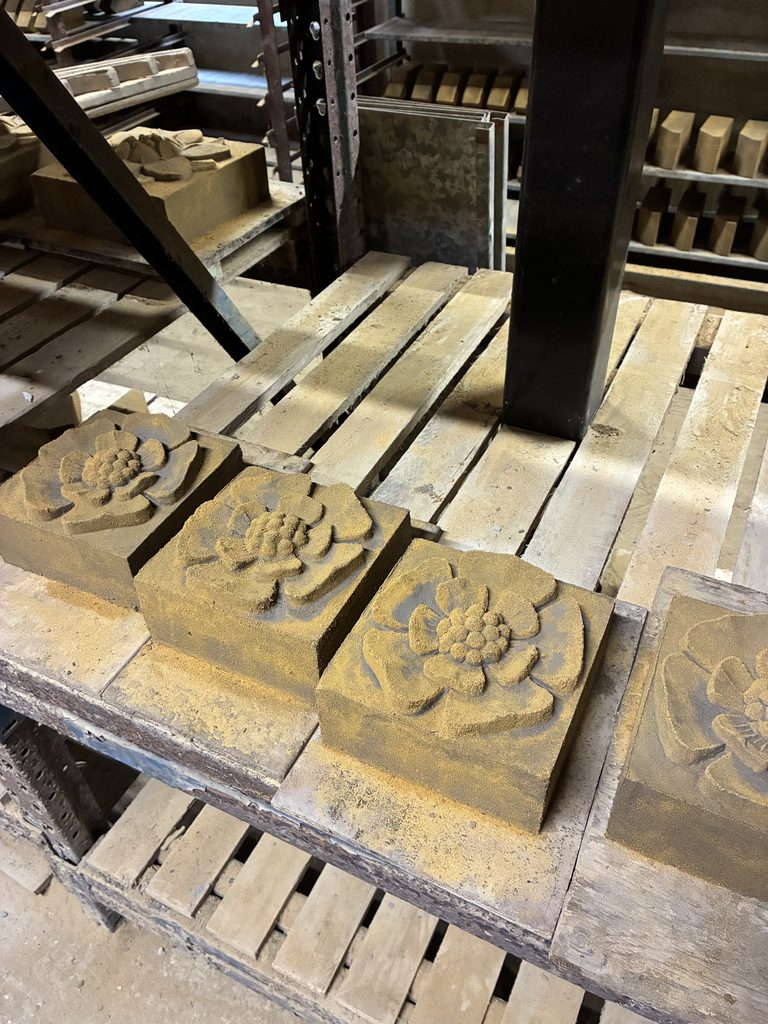
We also visited the building where the team produces handmade special bricks. Here, an extraordinary collection of moulds covers more than 5,000 different shapes, from copings, plinths and squints to jambs, mullions, bullnose bricks and chimney bricks.
These aren’t simply standard bricks in different sizes. They’re specialist pieces made to suit the character and requirements of individual buildings, often playing an essential role in restoring historic architecture. Seeing the range of moulds was a real eye-opener and demonstrated the depth of knowledge needed to reproduce traditional details accurately.
Centuries of brickmaking, and a story worth hearing
Perhaps the most special part of the day came over lunch, when we had the opportunity to hear from 93-year-old Peter Minter, whose family has been at the heart of the business for generations.
Peter’s father, Lawrence Minter, took over the brickworks in 1936. Although the site had already been producing bricks for hundreds of years, with the earliest evidence dating back to 1450, the business faced enormous challenges during the Second World War.
Before the war, around 35 or 36 people worked at the yard. When many were called up for service, the workforce fell to just six or seven. The team kept the business going by making land drainpipes for the Ministry of Supply, with the remaining workers preserving the skills that had sustained the brickworks for generations.
Peter learnt from these experienced brickmakers, many of whom had been born in the nineteenth century. At the time, he didn’t fully realise just how much knowledge he was absorbing. It was only later, when he understood the direction his life would take, that he recognised the importance of preserving those techniques.
As Peter explained, the business had to adapt as the market changed. After the war, his father moved into restoration work, and the yard gradually developed the specialist expertise for which it is known today.
One of Peter’s reflections really stayed with us: “The business has changed and yet it has not changed, because the essence is the same.”
It’s a powerful way of describing what makes Bulmer special. The business has evolved to survive and thrive, but its commitment to traditional brickmaking remains at its heart. The skills passed down through generations are still being used to create bricks for buildings that need to be preserved for generations to come.
Hearing Peter speak about his life’s work brought the whole visit into perspective. These aren’t just building materials. They’re the result of generations of learning, adaptation and dedication to keeping a specialist craft alive.
From the brickyard to the nation’s landmarks
One of the things that struck us most was the scale of the impact this small local business has had.
Bulmer works on major projects for organisations including the National Trust, English Heritage and Historic Royal Palaces, alongside private commissions for individuals. Its bricks can be found at some of the country’s most famous buildings, including Hampton Court Palace, Windsor Castle and St James’s Palace.
It’s remarkable to think that a traditional brickyard tucked away on the Essex and Suffolk border has played a part in preserving such important pieces of our national heritage.
The work requires much more than producing a brick that looks right. Historic buildings often need materials that are appropriate to their original construction, which means understanding traditional methods, the properties of the clay and the subtle variations that give handmade bricks their character.
That level of specialist knowledge is what makes Bulmer so distinctive. It also highlights why the continuation of traditional brickmaking matters, not only to the business itself but to the wider heritage sector.
Our Apprentice Challenge: Putting our marketing heads together
After a morning packed with fascinating stories, demonstrations and a much deeper appreciation of the trade, it was time for the Footprint team to get to work.
In the afternoon, we split into three teams for our latest Apprentice Challenge, set by Tonia. Our task was to develop marketing campaign ideas for the BBT Foundation, a new charity taking over responsibility for tours at the brickyard.
Operating alongside the traditional handmade brick business, the Foundation aims to increase engagement and learning among both general and specialist audiences. Its ambition is to help more people understand traditional brickmaking and how these methods can support the appropriate conservation and repair of historic buildings and structures.
It’s an important mission. The skills involved in traditional brickmaking are highly specialised, and keeping them alive means ensuring that more people understand their value. The tours offer an opportunity to bring that story to life, connecting visitors with the materials, people and processes behind historic buildings.
Our challenge was to think about how to raise the Foundation’s visibility with a specific audience and develop a campaign that would encourage people to engage with what it has to offer. We then presented our thoughts back to Tonia, and MD Tony.
It was a great opportunity to take everything we’d learnt throughout the morning and consider how we could communicate the value of Bulmer’s work to people who might not otherwise know much about traditional brickmaking.
And, as always with our Apprentice Challenges, it gave us the chance to step away from our usual roles, share ideas and approach a new business challenge from a fresh perspective.
A day that reminded us why we love what we do
At Footprint Digital, we spend our days helping businesses communicate what makes them different, connect with the right audiences and build their visibility. Days like this are a brilliant reminder of why understanding a business from the inside is so important.
You can read about a company’s history, its products and its services, but nothing compares to seeing the work for yourself, meeting the people who make it happen and hearing the stories that don’t necessarily make it onto a website.
At Bulmer, we saw a remarkable combination of heritage and ingenuity. We learnt how the right clay is selected, watched bricks being handmade, stood inside a still-warm kiln and discovered the extraordinary range of specialist shapes needed to restore historic buildings. Above all, we met people who care deeply about what they do and are committed to keeping traditional skills alive.
We left with a huge amount of respect for the brickmaking trade and the people who continue to practise it.
A massive thank you to The Bulmer Brick & Tile Company for such a warm welcome, generous hospitality and an endless supply of fascinating stories.
It was a brilliant day out, a genuinely valuable learning experience and a reminder that sometimes the best marketing inspiration starts with getting out of the office and discovering something new.