The Ads Remain the Same: Money for Nothing
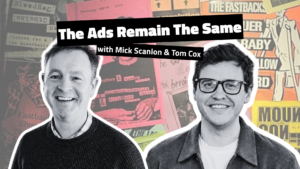
Welcome back to the third instalment of The Ads Remain the Same, the podcast where Footprint Digital’s Tom and Mick get together to talk paid media, advertising, and whatever else comes up along the way.
This time, the conversation starts with a question that anyone working in digital marketing will recognise: what does a PPC manager actually do all day? With automation taking over more of the hands-on campaign management, AI opening up new creative possibilities, and advertising platforms increasingly keen to make decisions on our behalf, the role is changing. But does that mean there’s less work to do, or simply more opportunity to add value elsewhere?
Tom and Mick get into the changing expectations of digital marketers, why curiosity and a willingness to get involved matter, how to make the most of campaign data, and what happens when AI-generated advertising misses the mark. They also find plenty of time for a music discussion, covering everything from The Stone Roses and The Teardrop Explodes to Gil Scott-Heron and Warren Zevon.
The Ads Remain the Same is a Footprint Digital podcast hosted by Mick, Head of Paid Media, and Tom Cox, Senior Paid Media Manager. Listen to the episode on YouTube: https://www.youtube.com/watch?v=Ga1a1mVuDIg
From managing PPC campaigns to being a more rounded marketer
If you asked a PPC manager to describe their average working day, you might struggle to get a straightforward answer. As Mick points out, the familiar phrase “no two days are the same” has never felt more relevant.
When Tom and Mick started out in the industry, the job was more clearly defined. Google was the main platform, and the core responsibilities revolved around keyword research, writing ad copy and making sure the landing page did its job. You learned the tools, developed your skills and largely stayed within your specialism.
That picture looks very different today. There are more platforms, more technology and far more opportunities to get involved in different aspects of a campaign. PPC managers might find themselves looking at creative production, video, audience strategy, analytics, website experience and even PR.
For Mick, the key to making the most of that change is curiosity.
He talks about the value of being willing to explore tools and ideas outside your usual remit, whether that means getting to grips with Semrush, using Footprint’s own Response RAIdar platform or learning from colleagues with different specialisms.
“You all have to chip in. You all have to give it a go,” is how he describes the mindset that makes agency teams work well together.
That willingness to explore can lead to some interesting results. Mick describes colleagues who will take an idea mentioned in passing, investigate it further and come back a couple of days later having built something useful from it. It is an example of what can happen when people are encouraged to follow an idea rather than immediately dismissing it as someone else’s responsibility.
Tom agrees that the technology now available makes it easier to branch out, particularly when it comes to creative work. Tasks that might once have required a call to a designer can now begin with a marketer experimenting with image generation, video or other tools themselves.
That does not mean specialist skills are no longer needed, or that every marketer should suddenly become an expert in everything. It means there is more scope to explore what is possible, understand how different disciplines fit together and bring better ideas to the table.
The important part is knowing why you are doing it. As Tom points out, making more content for the sake of it is not the answer. New tools should help solve a problem, improve a campaign or give a client something they would not otherwise have been able to achieve.
Money for nothing? What happens when automation takes over
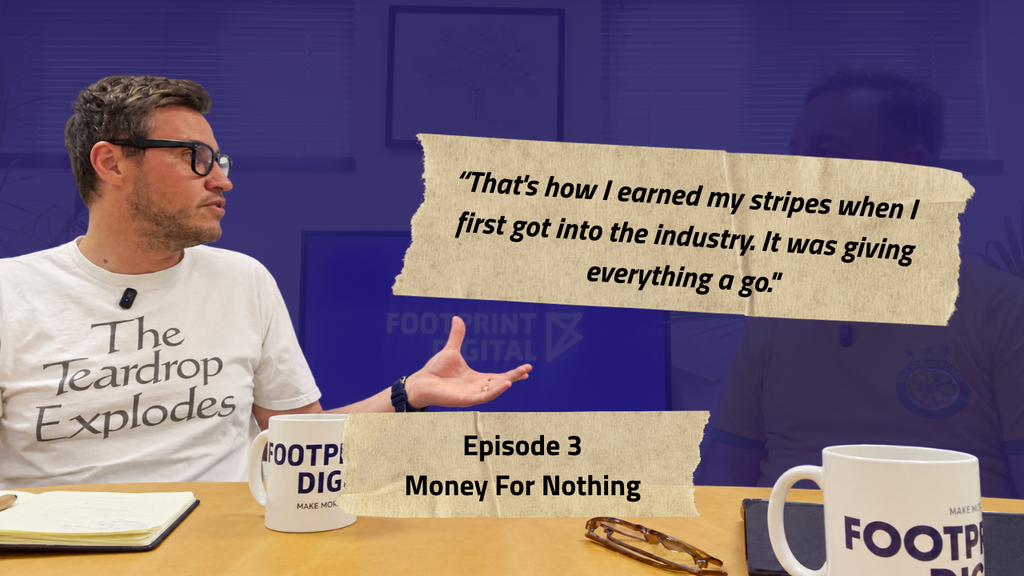
The episode’s title, Money for Nothing, plays on a familiar perception of PPC management. If campaigns are running smoothly, conversions are coming in and the return on investment looks healthy, is the job finished? Can the account manager put their feet up and head to the pub?
Not quite.
Tom and Mick discuss how automation has changed the balance of work involved in managing paid media. Tasks such as manual bid adjustments, which once took up a substantial amount of time, are now largely handled by the platforms. Campaigns have become more sophisticated, and tools can help marketers research keywords, build audiences and manage activity far more efficiently.
Tom describes the shift as a change in the balance between doing and thinking. In the past, a large proportion of the job could be spent working directly in the platforms, with less time left for analysing performance and making recommendations. Now, the technical work is often more efficient, leaving greater scope to investigate what the data is telling us and what else could make a difference.
In other words, automation should create room for better marketing, not remove the need for marketers.
There is still plenty to keep PPC managers on their toes. Search terms can reveal unexpected behaviour, campaign performance needs constant attention, and the platforms themselves are continually changing. But the opportunity lies in looking beyond the immediate campaign metrics.
As Tom puts it, the best paid media managers have always been the ones who “didn’t stop there”.
Getting relevant traffic to a website is an important part of the job, but it is only the beginning. What happens when people arrive? Do they engage with the content? Do they convert? Are they finding what they expected? If the answers raise questions, the PPC manager has an opportunity to investigate, make recommendations and help improve the wider customer journey.
The value is in what you do with the data
One of the strongest themes in Tom and Mick’s conversation is the idea that paid media data can be useful far beyond the advertising account itself.
A search terms report, for example, can reveal queries and customer needs that were not obvious during the original keyword research. Those insights can feed back into campaign targeting, but they might also give a copywriter new ideas for website content, help shape social media messaging or reveal questions that a business should be answering more clearly.
Mick describes the value of spotting a group of relevant search terms that have started generating useful data and sharing them with a colleague who works on content. What began as a PPC insight could become an opportunity to improve organic search visibility or make a brand’s messaging more relevant.
The same principle applies to website behaviour. If one page is expected to do the heavy lifting but is not converting, while a less prominent page is performing surprisingly well, it is worth investigating why. Could the stronger page be made more visible? Could its approach be applied elsewhere? Could a change to the website help bring more people to the content that is already working?
These are the kinds of questions that move paid media management beyond simply monitoring campaign performance.
Tom also talks about looking at the customer journey and using tools such as GA4 and Microsoft Clarity to understand what happens after the click. If visitors are arriving at a page and leaving after just a few seconds, the answer might not be to change the ads. The landing page, the offer or the message itself might be the problem.
That is where data can give marketers the confidence to challenge assumptions.
As Mick explains, it is much easier to have a constructive conversation with a client when you can show what you are seeing rather than simply offering an opinion. If the messaging is not landing, the question becomes whether it is right for the people the business is trying to reach.
Are we using language that makes sense to the customer, or are we relying on corporate messaging that sounds good internally but does not give a prospective customer a reason to act?
Sometimes, the right recommendation might even be to look beyond PPC altogether.
Putting the client first, even when PPC isn’t the answer
Tom and Mick are clear that being a good marketer means understanding what a client actually needs, rather than automatically recommending the service you happen to specialise in.
Mick explains that he has had conversations with clients where he has advised that PPC might not be the right approach at that particular moment. Content, SEO or conversion rate optimisation could be a better starting point, depending on the business and its objectives.
That kind of honesty comes with experience. When you are new to the industry, it can be tempting to say yes to everything because you want to help, impress the client and win the work. With time, however, comes the confidence to look at the bigger picture and explain when a different approach might deliver a better result.
The same thinking applies to the way marketing teams work internally.
Mick challenges the idea that a PPC specialist should only be interested in paid search and nothing else. He has seen conversations on LinkedIn where marketers express frustration at being asked to get involved in social media, PR or other areas outside their main specialism. While there are fair questions to ask about workload, expectations and pay, he believes there is value in being open to learning about other parts of digital marketing.
“Try it,” is his advice. “Chip in, have an opinion, have something to say.”
The reason is simple: the client benefits when the people working on their account share ideas and look for opportunities, rather than sticking rigidly to the boundaries of their job titles.
That might mean spotting a PR opportunity in a news story, suggesting a content campaign based on customer search behaviour or highlighting a competitor that the client should know about. It might not be PPC, but it could still help the client achieve their commercial goals.
Tom makes a similar point about being invested in the businesses you work with. He recalls a conversation with John Morris, who summed it up neatly: “If the client knows that you care, that’s priceless.”
Being invested does not mean working around the clock or taking every task home with you. It means understanding the client’s business, paying attention to what is happening in their industry and bringing relevant ideas to conversations rather than simply reporting on what has already happened.
When a client can see that you understand their world and are thinking about what might help them next, the relationship becomes more valuable than a straightforward exchange of campaign reports and recommendations.
AI can help with creative work, but human judgement still matters
AI is another reason the role of a PPC manager is evolving. Tom and Mick discuss how image-generation tools can make creative production more accessible, particularly for businesses that do not have the budget or resources to commission new photography every time they need an advert.
Mick shares an example involving a greetings card company. By using Google’s Nano Banana image-generation tool, he has been able to take existing product imagery and place it into seasonal settings, such as a Christmas or birthday scene.
The important detail is that the cards remain the focus. The generated background adds context without distracting from the product itself.
As Tom observes, seeing a product in use can change the way someone relates to it. A mug on a plain white background is simply a mug. A mug shown in a setting where someone might actually use it can help a potential customer picture it in their own life.
That additional context can make a creative asset more relatable, without necessarily requiring a full photoshoot.
For smaller businesses, that accessibility can be particularly useful. A local community centre might need a poster for a summer fair, for example, but not have the budget to commission bespoke creative. Used thoughtfully, AI can help bridge that gap.
However, both agree that accessibility should not be confused with quality. AI-generated content still needs a purpose, and someone needs to check that the result makes sense, looks right and meets the client’s expectations.
Tom is particularly wary of creating what he describes as “absolute mush” simply because a tool makes it easy to produce more content.
The distinction is between using AI to improve an idea and using it as a substitute for having one in the first place. Human judgement remains essential, both in deciding what to create and in checking the final result.
The National Trust, AI-generated ads and the importance of brand identity
That brings Tom and Mick to one of the episode’s biggest talking points: the discussion around AI-generated adverts appearing in the National Trust’s recent TikTok advertising.
The National Trust is a brand with a strong identity, closely associated with nature, heritage and conservation. As Tom and Mick discuss, that makes the use of AI-generated creative particularly interesting. The ads attracted attention because the style appeared at odds with the organisation’s established look and feel.
Mick explains that he had looked through the brand’s advertising library and found that, alongside a much larger collection of videos featuring real places, there were a small number of ads that had the familiar visual characteristics of AI-generated content. The National Trust had responded to criticism by explaining that the ads had been generated through AI tools within the platform, rather than created directly by the organisation in the way people had assumed.
For Mick, the issue was not simply whether AI had been used. It was whether the resulting creative felt right for the brand.
He recalls seeing how methodically the National Trust approached its creative when he interviewed for a role there around 25 years ago. There was a clear system, including colour schemes associated with different types of property, and a consistent level of professionalism.
The ads under discussion felt very different from that established approach.
Tom questions whether the rush to use automated creative features can lead brands to lose control over how they appear. If an advertising platform can generate or alter assets with very little intervention, the results might not reflect the organisation’s tone, values or visual identity.
Mick shares similar frustrations with the way advertising platforms increasingly encourage users to hand over control. Features such as automatic placement adjustments, audience expansion and creative enhancements can be switched on by default or presented as recommended options, even when an advertiser has a specific reason for choosing a particular audience or format.
He recalls an example involving a motorcycle insurance brand, where an AI-generated video feature produced a bizarre result with the rider’s head seemingly floating in the background. It is an amusing example, but it highlights a serious point: just because a platform offers a feature does not mean the feature is right for every campaign.
Tom believes there is still a need for people who understand the platforms and know what those choices will mean in practice.
“It’s never been more important for that manual intervention,” he says, emphasising the importance of having someone who understands what a setting will do before switching it on.
Automation will continue to improve, and there may come a point when these tools can deliver the intended result more reliably. For now, though, the lesson is to use them selectively, check the output and make sure it fits the brief.
The National Trust discussion also raises a wider question about audience. A style that feels irritating or inappropriate to one person might work well for a different demographic on TikTok. Tom acknowledges that short-form video is not necessarily his preferred format, but recognises that it can serve a purpose for other audiences.
The challenge is not to reject new formats or technologies outright. It is to understand the audience, respect the brand and make deliberate decisions about how to reach people.
The albums we’re playing: from The Stone Roses to Gil Scott-Heron
As ever, the conversation takes a musical turn, and episode three offers plenty to get stuck into. This week, the music discussion is less about picking one definitive album and more about the stories behind the records, the bands that shape our tastes and the unexpected connections that lead us to discover something new.
Mick starts with a mention of The Stone Roses, prompted by his T-shirt from their 2012 reunion gig at Heaton Park. He explains that he did not see the band during their first run, so when they reformed, it felt like an opportunity worth taking. It was a memorable day, with Beady Eye and Ziggy Marley among the support acts.
But The Stone Roses are not his album of the week. Instead, Mick describes a week of musical rabbit holes, starting with Australian band Powderfinger. After a recommendation from his wife’s cousin, he begins exploring the band, whose sound he compares to the Pearl Jam and Seattle rock scene of the 1990s. The group have reunited and are touring Australia, where demand has reportedly been so strong that additional gigs have been added.
It is a good example of how musical discovery often begins: someone recommends a band, you give them a listen, and before long you’re exploring a whole catalogue you might otherwise have missed.
Another discovery comes through Spotify. A track by The War on Drugs leads Mick to recognise “Accidentally Like a Martyr” as a Warren Zevon song. That sends him back to Zevon’s music, which he admits he does not play as often as he might because his wife is not a fan.
The album that stands out for him is Excitable Boy. Mick talks about Zevon’s songwriting and the remarkable company he kept, with musicians such as Jackson Browne and Linda Ronstadt among the names associated with the record. He also mentions how much he enjoys discovering artists through the recommendations and influences of musicians he already admires.
Tom’s musical choice takes the conversation in a different direction. His album of the week is Pieces of a Man by Gil Scott-Heron, a record he describes as powerful, dark and emotionally challenging.
While many people gravitate towards Scott-Heron’s “The Revolution Will Not Be Televised”, Tom says he finds the album as a whole particularly affecting. He talks about its depiction of a family dealing with unemployment, alcoholism and abuse, and how the music can leave you needing a moment to sit with what you have just heard.
For Tom, that is part of the power of music: it can be fun and entertaining, but it can also communicate something difficult in a way that stays with you. He praises Scott-Heron’s soulful voice and the way the album conveys its message, contrasting it with the lighter, more playful music he enjoys too.
The route that led Tom to Pieces of a Man is just as interesting as the album itself. He describes an unorthodox approach to discovering music, often working backwards from one artist to another. A track by The Cribs, for example, features spoken vocals from Lee Ranaldo of Sonic Youth, prompting Tom to investigate the band. Other connections lead back to The xx and Jamie xx, and from there to Gil Scott-Heron.
As Tom explains, one discovery can open the door to another. You hear a musician mention an influence, look them up, and suddenly find yourself listening to something you would never have searched for directly.
He and Mick also discuss the way bands introduce their audiences to other artists. Tom recalls how listening to interviews with Manic Street Preachers in the 1990s felt like being handed a ready-made playlist, with the band referencing musicians and influences worth exploring. Blur helped lead him towards Pavement, while conversations about artists such as Suede can reveal the musical connections that sit behind a band’s own sound.
They also share a love of cover versions, and the surprises that come from discovering that a familiar song was originally recorded by someone else. Tom remembers hearing Nirvana’s version of David Bowie’s “The Man Who Sold the World” at college and initially assuming it was a Nirvana original. Mick brings up Warren Zevon’s cover of Prince’s “Raspberry Beret”, recorded with R.E.M. musicians under the name Hindu Love Gods.
It’s the kind of conversation that reminds you how much musical history is connected. Follow one artist’s influences, collaborators or cover versions, and you can end up somewhere completely unexpected.
The discussion also touches on The Teardrop Explodes, a band Tom clearly loves. He singles out Kilimanjaro, mentioning tracks such as “Reward”, “Treason”, “Bouncing Babies” and “Falling Down Around Me”. He loves the band’s distinctive sound, particularly the brass on “Reward”, and describes the album’s deeper cuts as songs that continue to hold up alongside the better-known tracks.
There is a brief story about seeing Julian Cope perform at a festival, too. The performance was chaotic: Cope was late, played for a short time and then appeared to disappear without anyone quite seeing him leave. It sounds like a shambolic gig, but one that has clearly stayed in the memory.
And that’s part of the joy of the music segment. It’s not just about recommending albums; it’s about the experiences, people and memories attached to them. A reunion gig at Heaton Park, a recommendation from a friend, an unexpected Spotify track or a band name dropped in an interview can all lead to something worth listening to.
For Tom and Mick, following those connections is a reminder that discovery is part of the fun, whether you’re exploring music or looking for a new idea in marketing.
The takeaway: don’t stop at your specialism
Across the episode, one message comes through clearly: the role of a PPC manager is no longer just about building campaigns and bringing traffic to a website. Automation is changing the practical work, but it is also creating opportunities to think more broadly, use data in new ways and contribute to a client’s wider marketing goals.
That requires curiosity, a willingness to experiment and the confidence to challenge assumptions. It also means understanding when a new tool is genuinely useful, when a campaign needs a different approach and when a client would benefit from expertise outside your own specialism.
Whether it’s exploring an unexpected search term, questioning an AI-generated advert or following a musical recommendation down a rabbit hole, the value often comes from looking beyond what is immediately in front of you.
And if there’s one thing Tom and Mick make clear, it’s that there is always more to explore.
The Ads Remain the Same is a Footprint Digital podcast hosted by Mick, Head of Paid Media, and Tom Cox, Senior Paid Media Manager. Listen to the episode on YouTube: https://www.youtube.com/watch?v=Ga1a1mVuDIg